When Twitter rebranded to X, I’ll be honest, I thought it was going to be a complete disaster.
But after digging into the technical details, I’m genuinely impressed.
This is actually one of the most interesting migration case studies I’ve seen, and I want to share what enterprise-level migrations should look like.
Let’s dive in.
1. Executive Summary
In just 12 months, X achieved:
- Organic traffic: +46.7M → 310M/month
- Organic keywords: −30.1M → 17.9M total
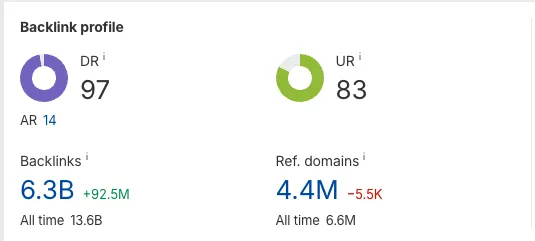
- Backlinks: +2.6B → 6.3B live backlinks
- Referring domains: +1.3M → 4.4M total
- Domain Rating: 96 → 97
- Strong growth: US, Japan, Turkey, Saudi Arabia, Brazil
- Massive AI visibility growth across ChatGPT, Perplexity, Copilot, Gemini
👉 This proves SEO success today is not about keyword quantity, it is about becoming a trusted global entity for both users and AI. 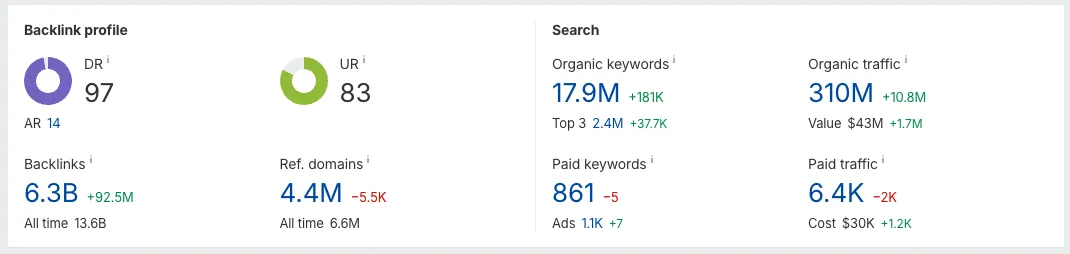
👉 They reduced 30M keywords but increased authority, traffic, and trust, the exact opposite of outdated SEO logic.
2. Strategic Objective I Observed
Based on the data pattern, x.com’s SEO objectives were likely:
- Cut low-value indexed pages
- Strengthen entity authority
- Maximize AI answer visibility
- Push language hubs
- Capture navigational and branded demand
👉 This is enterprise-level SEO maturity that most brands never reach.
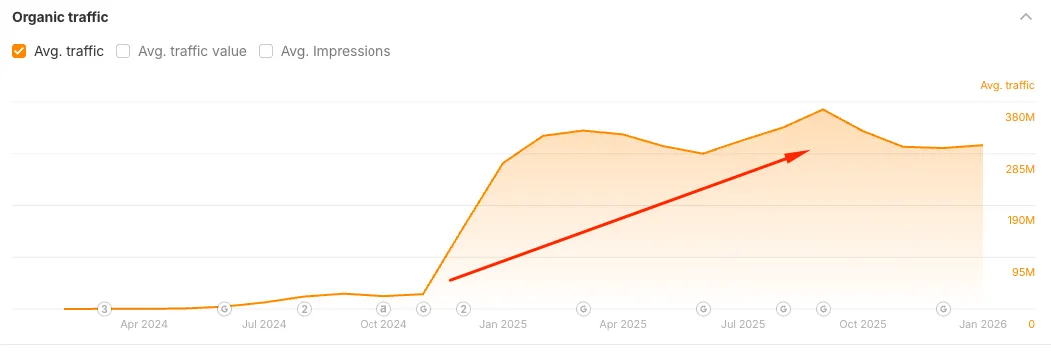
3. Organic Traffic Growth Sources
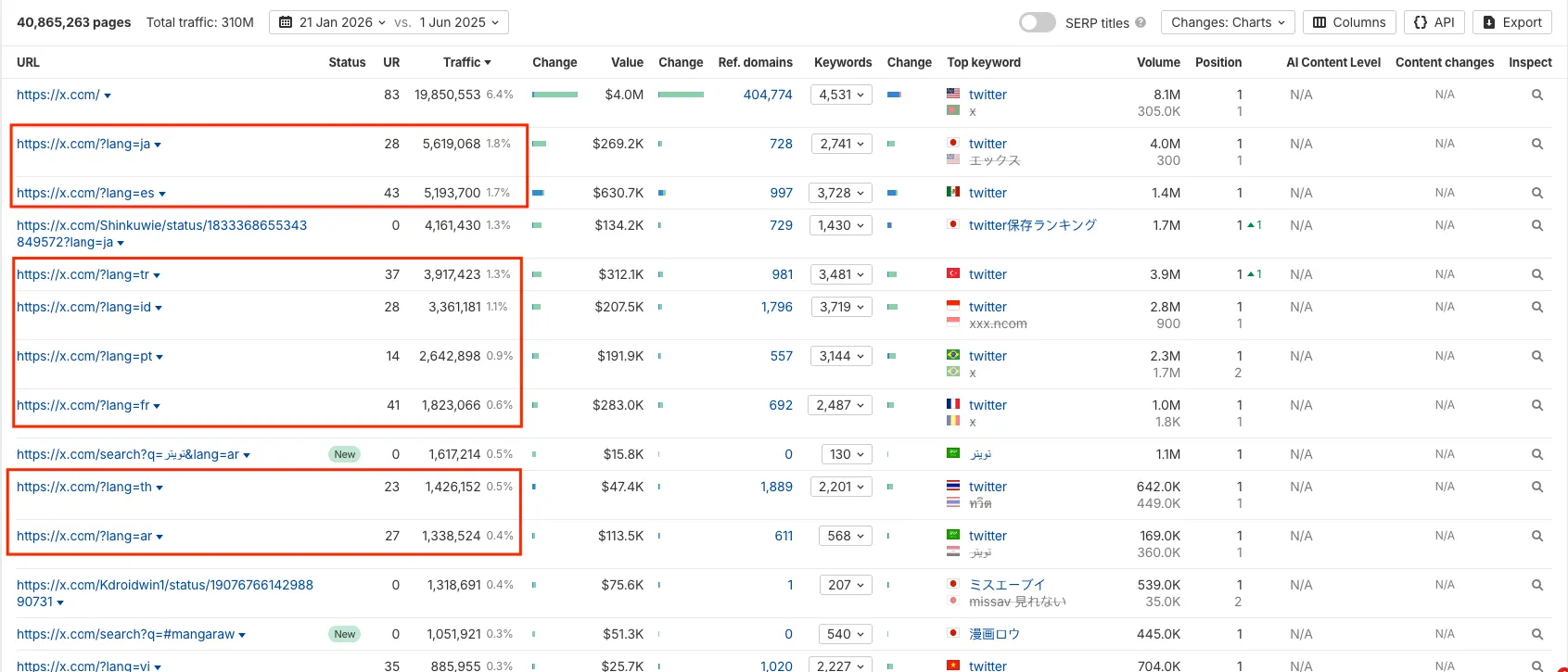
Top traffic increases:
- x.com/ → +14.7M
- ?lang=ja → +5.9M
- ?lang=tr → +4.3M
- ?lang=en → +2.9M
👉 Language routing alone contributed more than many companies’ total traffic.
4. Keyword Loss Explained
Keyword changes:
- Total keywords: −30.1M
- Branded: −13.6M
- Informational: −28.6M
- Non-local: −25.6M
Traffic gained:
- Informational traffic: +58.9M
- Navigational traffic: +43.6M
- Branded traffic: +62.1M
👉 This is proof that fewer, better keywords outperform millions of weak ones.

5. Intent Distribution (After Migration)
| Intent | Monthly Traffic |
| Informational | 269.4M |
| Navigational | 71.6M |
| Commercial | 15.6M |
| Transactional | 7.4M |
👉 X dominates discovery and navigation, not selling, which is exactly right for a platform business.
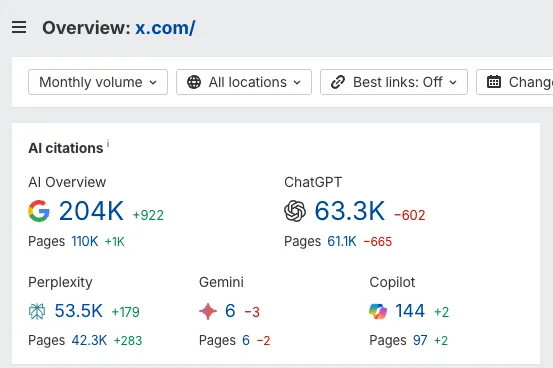
6. AI Search Visibility Growth
AI mentions:
- ChatGPT: 61.1K pages (+42.3K)
- AI Overview: 110K pages (+100K)
- Perplexity: 42.3K pages (+57.4K)
- Gemini: 6 pages (+7)
- Copilot: 97 pages (+201)
Why AI prefers X:
- Real-time data
- Massive UGC
- Clear entity signals
- Constant crawling
👉 X is becoming training data, not just a website.
7. Backlink Profile
- Total backlinks: 6.3B
- Follow: 71.2%
- Nofollow: 28.7%
- Referring domains: 4.3M
Sources include:
- Universities
- Governments
- Media
- Global brands
👉 This is not link building; this is a global digital authority. We strong organic PR they started getting links from websites.
8. Broken Backlinks After Migration
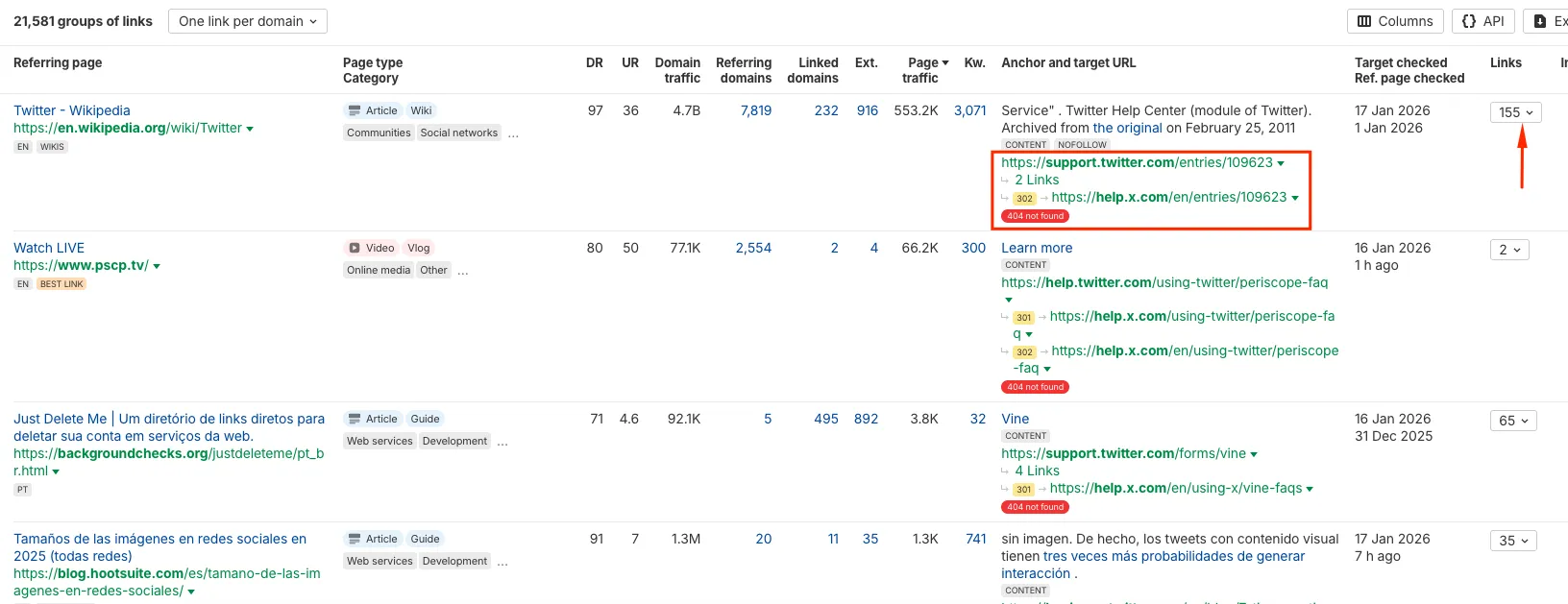
- 21,581 broken backlink groups
From:
- Wikipedia
- Old Twitter URLs
- Redirect chains
👉 Even X leaves SEO value unused. Link reclamation is one of the easiest wins any company can copy. They haven’t setup from redirection chain to more than 20k pages but this may not their priority to work on.
9. Technical SEO Signals
| Status | Percentage |
| 200 OK | 37.6% |
| 3XX Redirects | 57.7% |
| 404 Errors | 4.6% |
👉 Redirect dominance shows migration control, not technical failure. Even though they migrated from the domain, but still they still managed to reduce the 404 errors.
Final Verdict
Most domain migrations destroy organic traffic. Rankings drop, pages disappear, and recovery takes months or even years. X did the opposite.
After moving from Twitter.com to X.com, it used the migration as a strategic reset, not just a technical change.
That is why it keeps winning organic visibility.
Its growth did not come from blogging, keyword expansion, or link campaigns. It came from:
- Strong entity authority
- Massive brand demand
- High AI citation visibility
- URL cleanup and crawl control
- Language-based routing
- Real-time relevance
The biggest lesson is simple:
X lost 30M keywords and still grew traffic because authority beats volume.
SEO is no longer about ranking pages. It is about becoming the source that Google and AI trust.
X did not grow by doing traditional SEO.
It grew by becoming the internet’s default real-time reference.
That is what future SEO looks like.