Let’s be honest. We all know the usual backlink tactics. Guest posts, blogger outreach, cold emails, and all that.
And sure, some of them can work. But most take a ton of effort, and a lot of the time you still end up paying for links anyway.
Very few sites hand out backlinks just because you asked nicely. Even the “free” strategies often turn into paid placements behind the scenes.
What actually makes a difference is earning links from real, legitimate sites. Those are harder for competitors to copy.
The best part? You don’t need a big budget to do it.
Here are eight approaches I’ve seen work consistently.
1. Create linkable assets (e.g. glossary)
This one’s almost too simple, but it works beautifully.
Think about it: every industry has its jargon. People are constantly writing blog posts and articles where they mention technical terms.
What do writers love to do? Link out to a good definition.
Create a comprehensive hub of definitions for the common terms in your space.
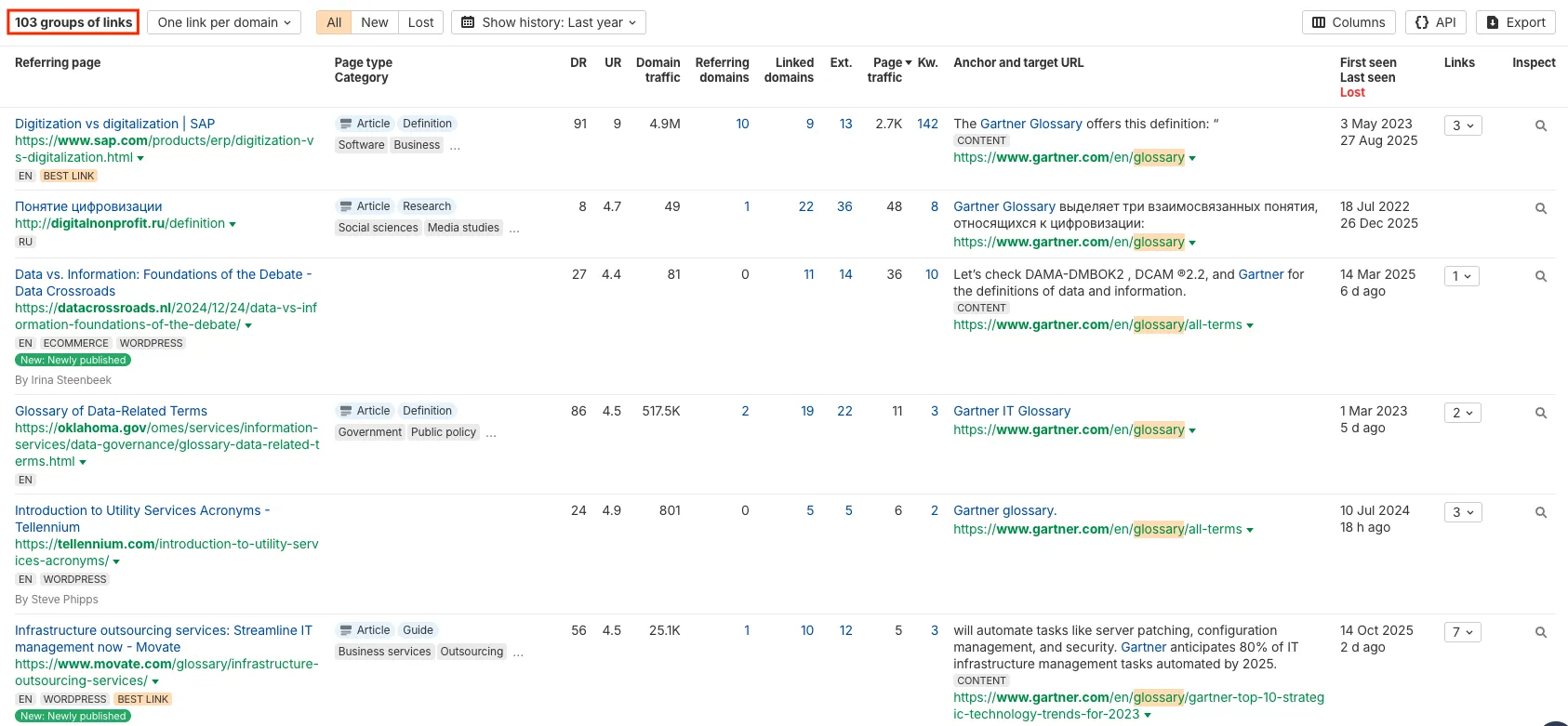
👉 Real example: Gartner’s Glossary has pulled in tens of thousands of backlinks since 2019. It’s become the go-to reference for finance and tech terminology.
2. Turn the trend into infographics that people would like to cite
When something is trending, people are actively looking for content to explain or summarize it.
Infographics, visual maps, and breakdowns perform especially well during these moments because they’re easy to embed and reference.
The real advantage is speed. Catch the trend early, and your content often becomes the link people keep using.
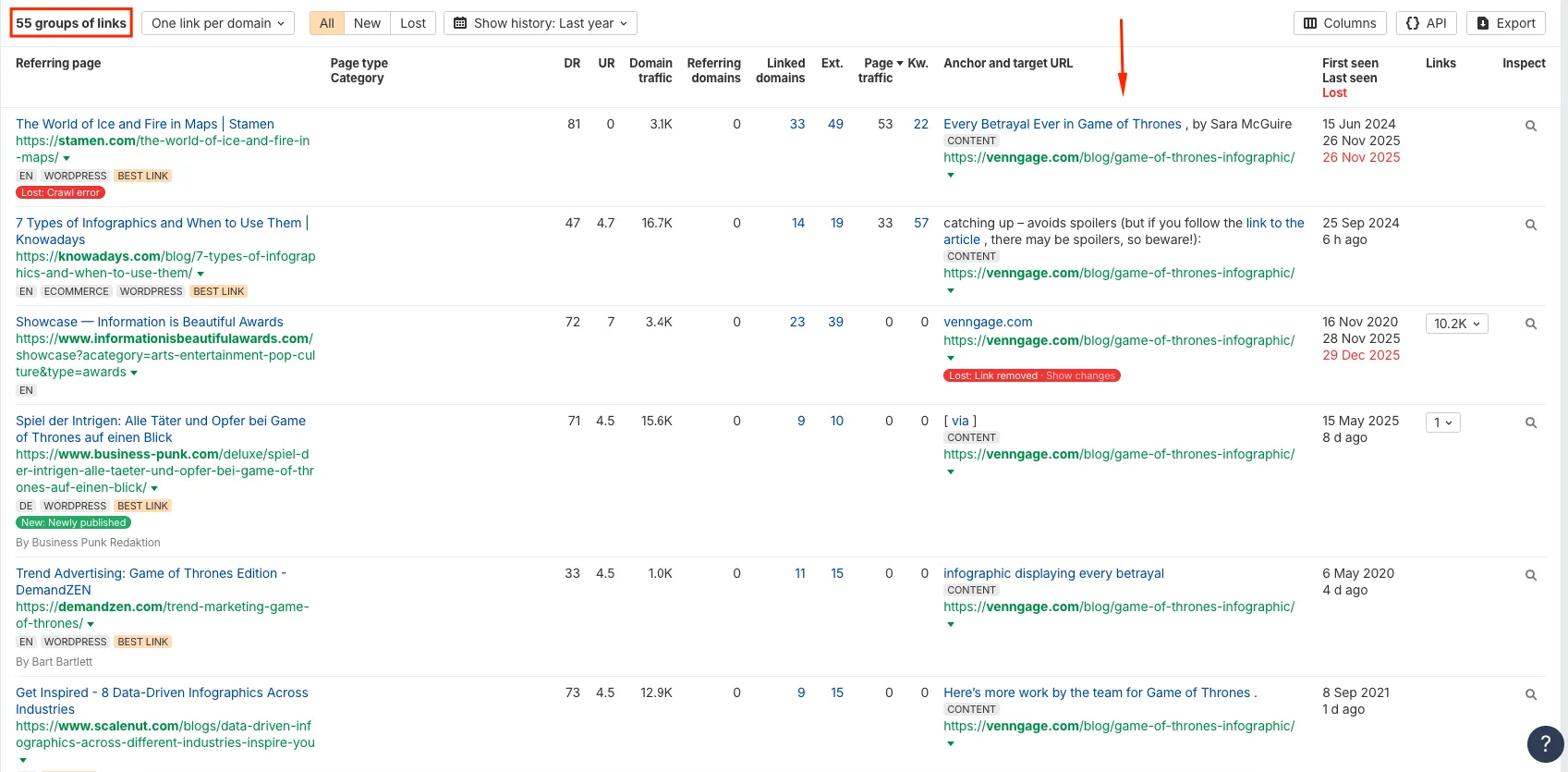
👉 Real example: At the height of Game of Thrones, Venngage published a “Web of Betrayals” visual mapping character relationships and intrigue. It picked up 55 high-authority news backlinks
3. Publish data/survey/case study within your niche
If useful information is scattered across dozens of sites, bring it into one organized document.
When you become the easiest place to find that data, writers naturally link to you as the source.
This works especially well with benchmarks, statistics, or industry records that people repeatedly search for.
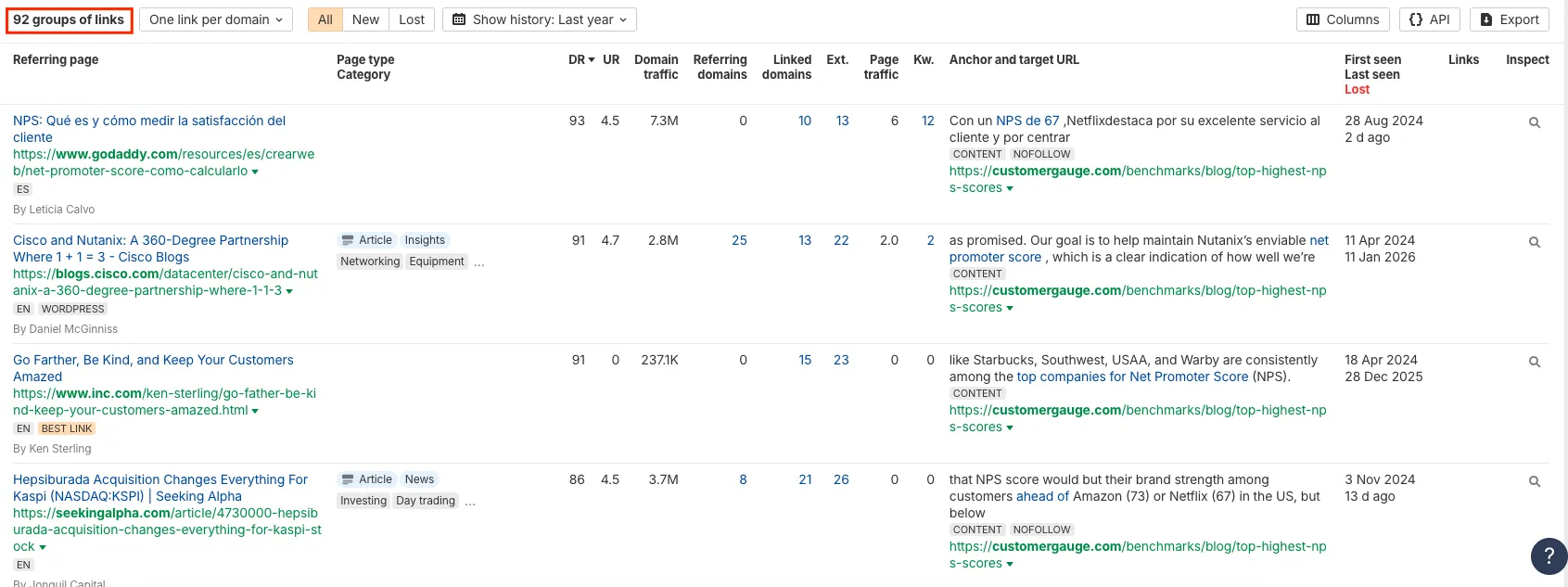
👉 Real example: CustomerGauge built a searchable database of company NPS scores, becoming the go-to citation source and earning around 92 new backlinks for single page.
4. Share research or insights of your own customer
If you’re sitting on interesting data from your customers or users, you’re sitting on a goldmine of potential backlinks.
The trick is analyzing that data for insights that others in your industry would find valuable, then publishing the findings.
Only make sure you won’t reveal any sensitive data of your customer.
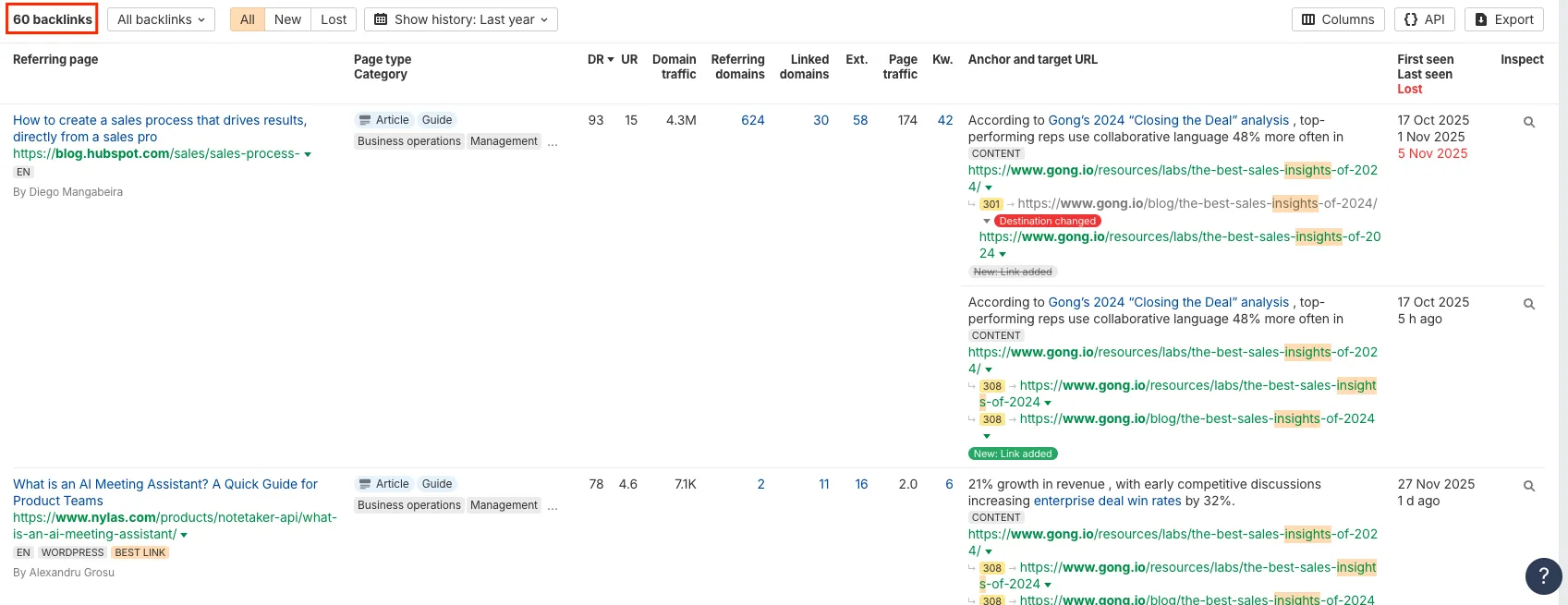
👉 Real example: Gong analyzed thousands of sales calls in its Research Labs series to uncover what language and call length actually close deals. Because it was proprietary, data-backed insight, creators referenced it heavily, earning 790+ referring domains.
5. Launch a niche job board
This one’s clever and often overlooked.
A job board does two things: it provides genuine value to your ideal customer profile (they’re looking for jobs or talent in your space), AND it generates backlinks from every company that posts a job.
Why? Because companies often link to their job postings from their own careers pages, press releases, and team pages.
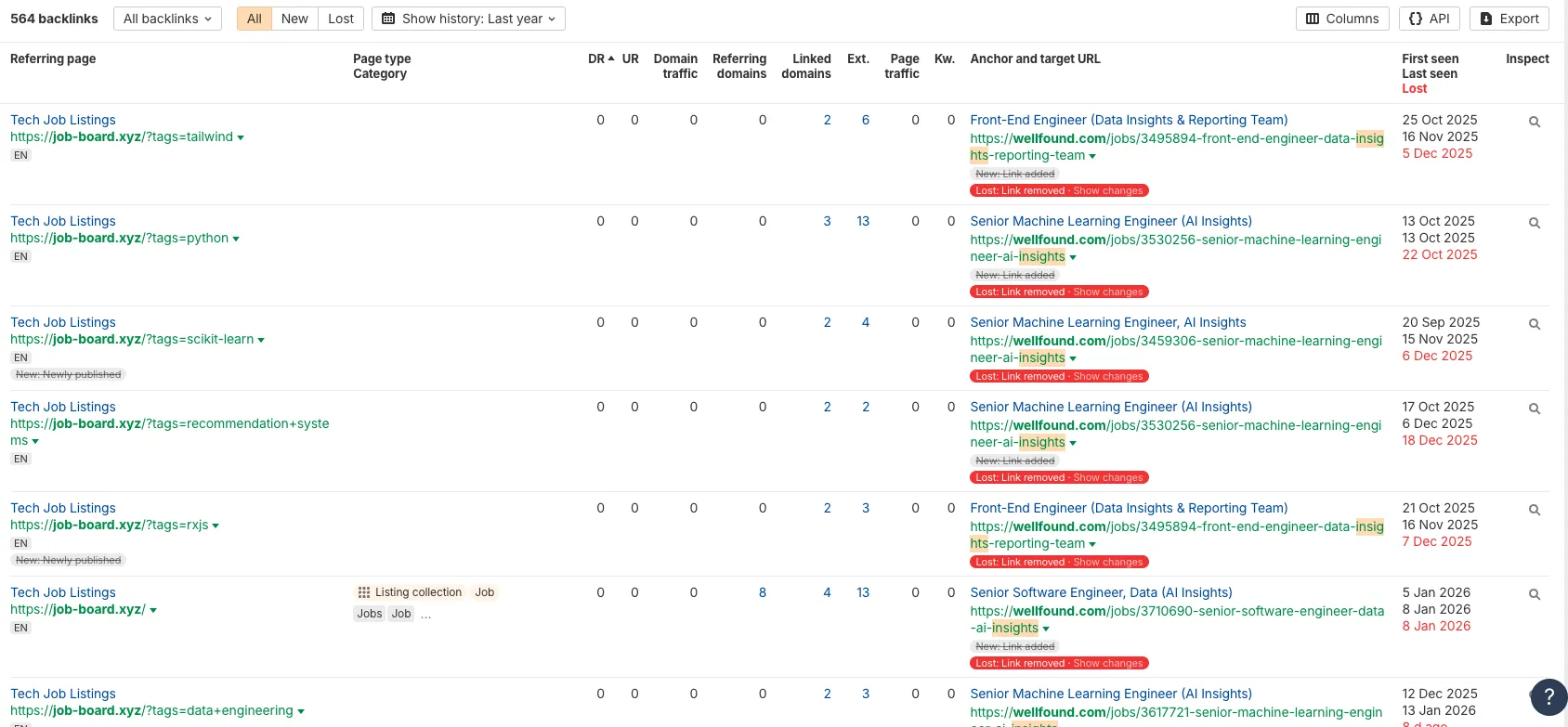
👉 Real example: WellFound has accumulated over 564 backlinks since March 2023 just from their job board feature.
Yes, this requires building and maintaining a platform. But if you can pull it off, it’s a link-building machine that runs on autopilot.
6. Use the moving man method
Find popular resources in your niche that shut down, moved URLs, or now return errors.
Then find the sites still linking to them and offer your content as the replacement.
You’re helping them fix broken links while earning a relevant backlink.
Conversion rates are usually strong because it solves a real problem.
You can check how do it.
Breakdown of Brian Dean’s moving man link building tactic for SEO
7. Create roundups with recognition/credibility that people want to share
People love being recognized. Use that.
Expert roundups, interviews, awards, “top” lists, and featured profiles tap into something simple: people like being highlighted.
Think about it: if someone includes you in a “Top 50 Marketers to Follow” list, aren’t you going to share that?
Probably link to it from your bio or about page?
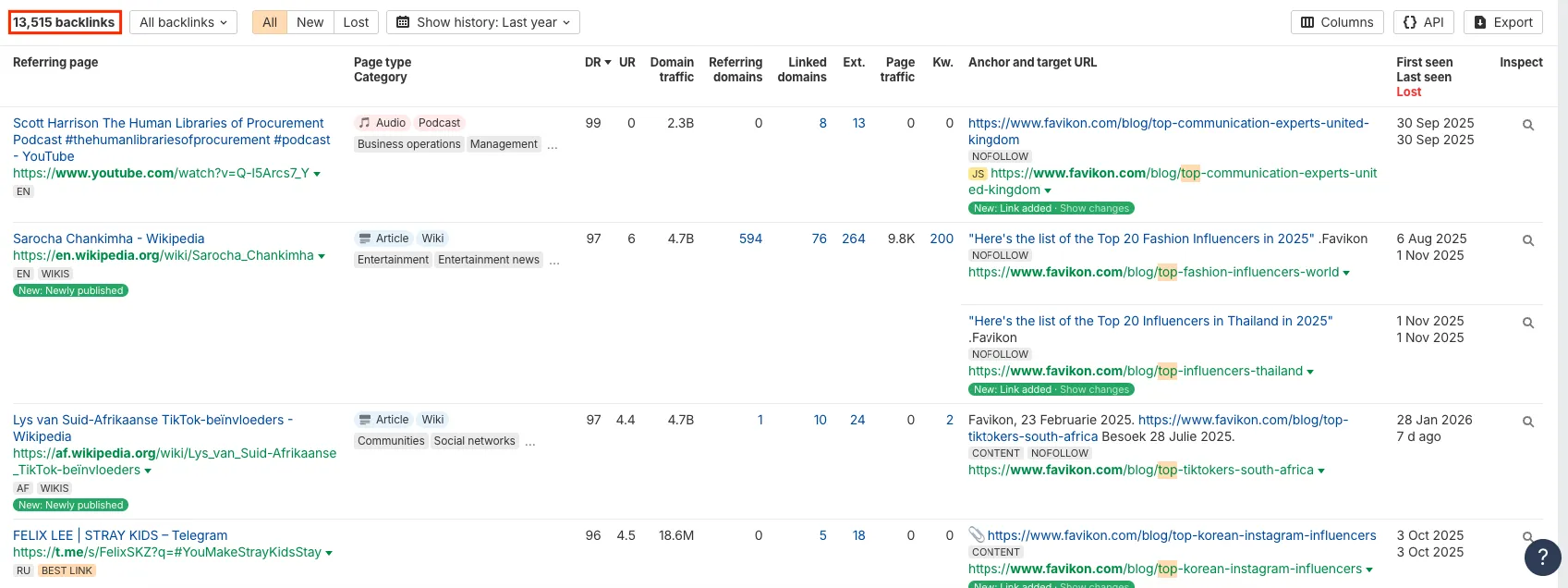
👉 Real example: Industry award websites like Favikon consistently get links from every single winner or top lists that want to show off their recognition.
8. Reclaim unlinked mentions
This might be the easiest method on the list.
People mention brands all the time without actually linking to them. Your job is to find those mentions and politely ask for the link.
Set up Google Alerts for your brand name, your founder’s name, your product names, and anything that might get mentioned.
When you find an article that mentions you without linking, send a friendly email asking if they’d mind adding a link.
My opinions
None of these are hacks.
They work because they create things people naturally want to reference, cite, and share. That’s why they hold up long-term while shortcut tactics fade.
Instead of trying all eight, pick one or two that fit your business and execute them well.
Depth beats doing everything halfway.
What backlink strategies have worked for you? Hit reply and let me know.
I’m always looking for new methods to test.