When people talk about ClickUp’s SEO success, the first thing they say is,
“They publish a lot of content and website authority.”
That’s true, but that’s not why they won.
Back in 2018, ClickUp was getting around 30k organic visits a month. By December 2025, that number had grown to 1.3 million.
Growth like that doesn’t come from quick SEO tricks. It comes from doing the basics well, staying consistent, and understanding how search traffic grows over time.
So I looked deeper.
Yes, they get a lot of branded searches today.
But that’s not the interesting part.
The real question is: how did they grow before anyone knew the brand?
Here’s what they actually did.
Feature pages: turning product functionality into search demand
Most SaaS companies treat feature pages like glorified sales collateral.
ClickUp didn’t.
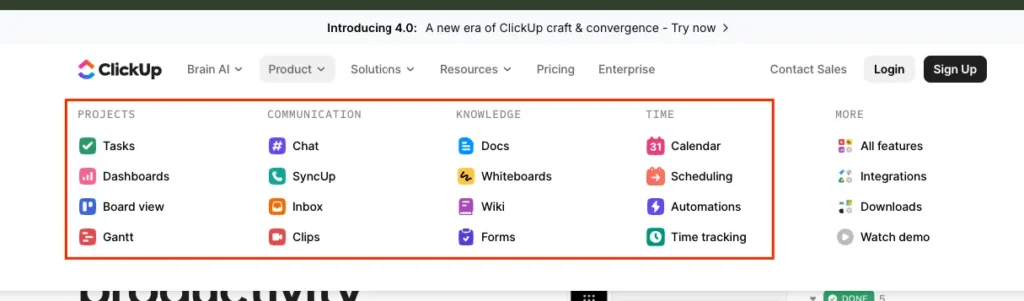
They created hundreds of feature-focused pages, each centered on a specific job to be done: forms, calendars, automations, docs, and so on.
- These pages aren’t just “What we offer.”
- They’re “Here’s how you solve this exact problem.”
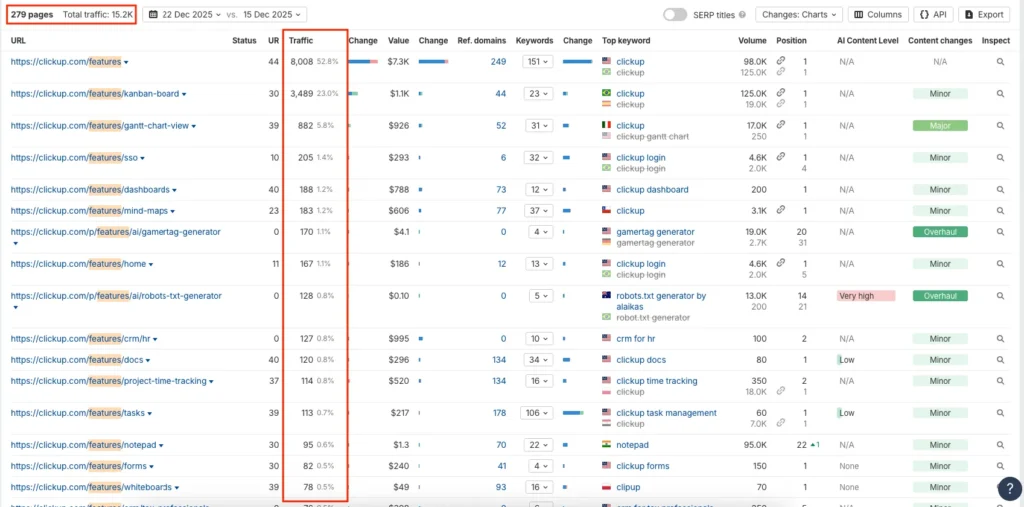
Result? Around 273 feature pages quietly ranking and pulling in 15k+ organic visits per month.
Is that massive traffic? No.
Is it high-intent traffic that compounds trust and conversions? Absolutely.
My take:
Feature pages aren’t traffic pages; they’re conversion accelerators. ClickUp understood that early.
Integration pages: SEO meets product growth
This is one of my favourite parts of their strategy.
ClickUp created dedicated pages for integrations with tools their audience already uses: Zapier, Slack, GitHub, and dozens more.
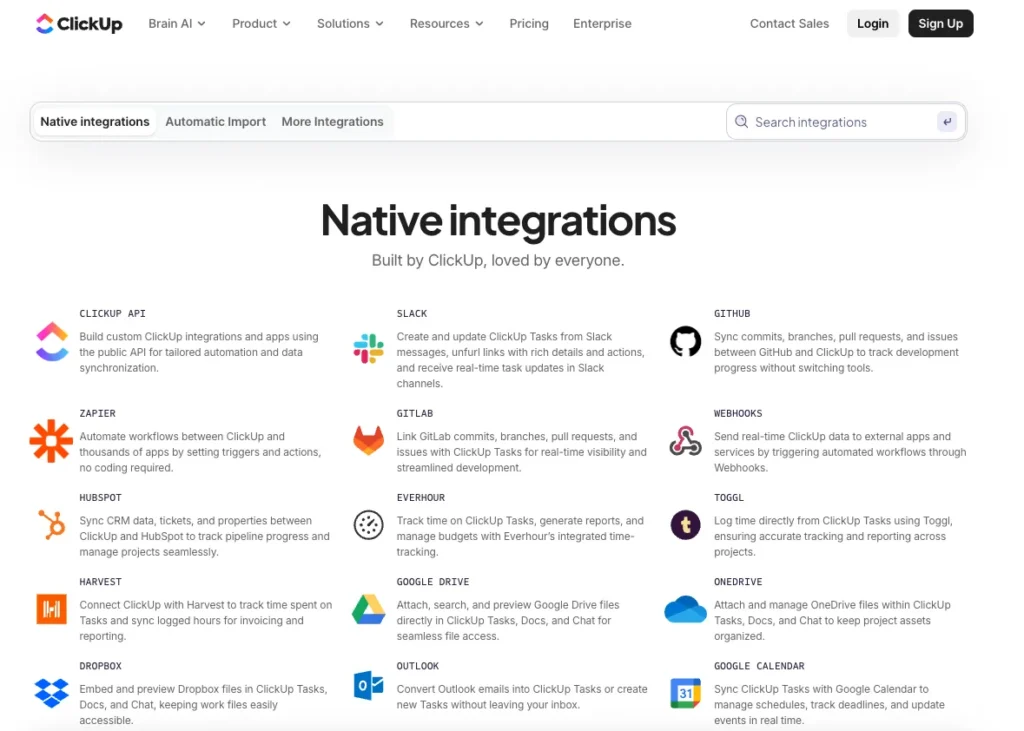
On paper, these pages only bring in about 1.1k organic visits per month across ~70 pages.
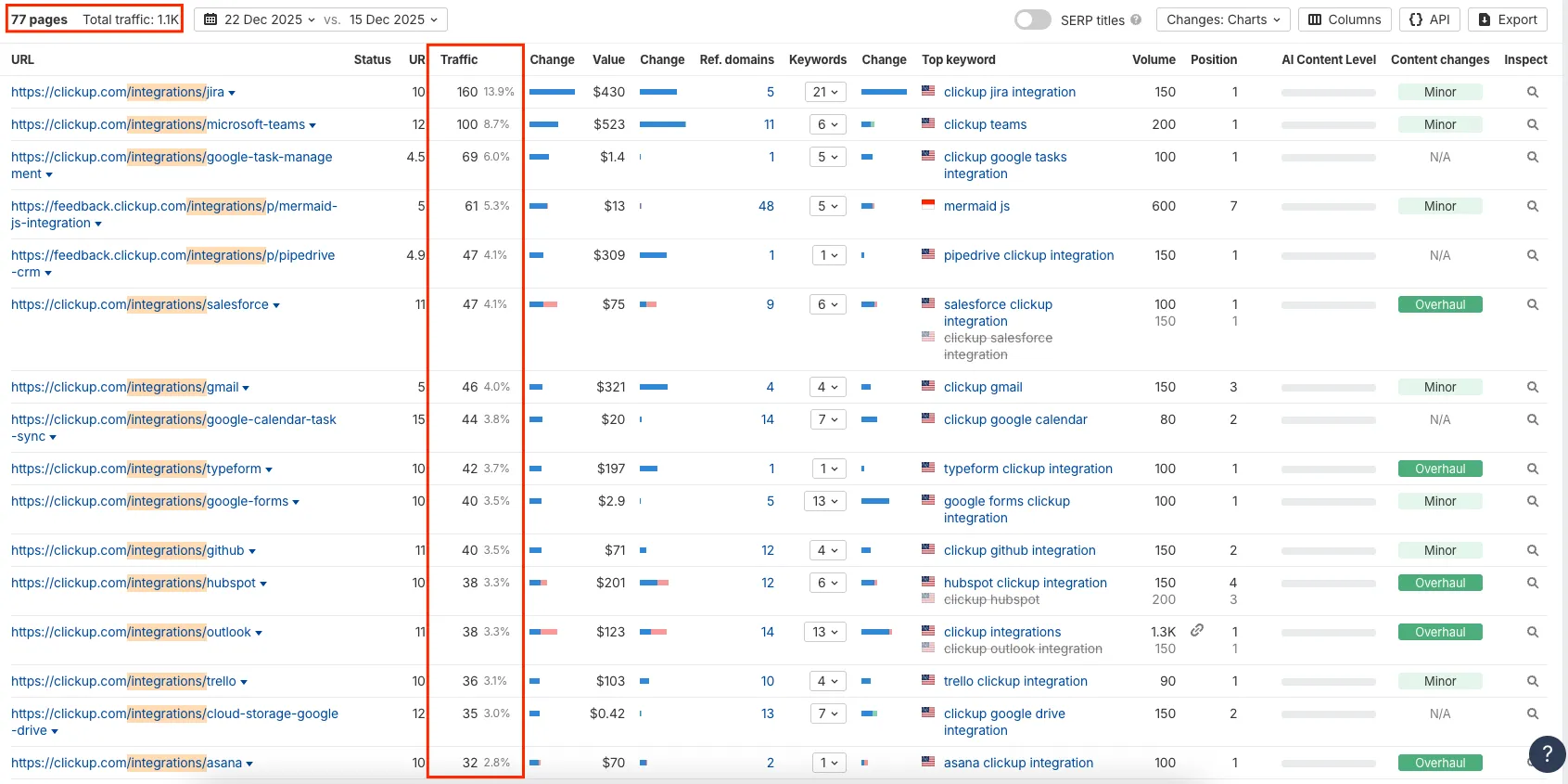
But here’s the mistake many people make: they judge integration pages purely on traffic.
These pages do three things at once:
- Capture bottom-of-funnel searches
- Strengthen topical relevance in the ecosystem
- Improve actual product adoption and retention
SEO + product + partnerships, all aligned.
That’s mature SEO thinking.
Alternatives content: playing the long comparison game
ClickUp went hard on alternative content. Really hard.
They’ve published 250+ “alternatives” articles, covering:
– Direct competitors (Jira, Asana)
– Tools from adjacent workflows (Excel, Airtable, ChatGPT, Streamlit)
On the surface, the traffic looks modest, around 1.5k monthly organic visits.
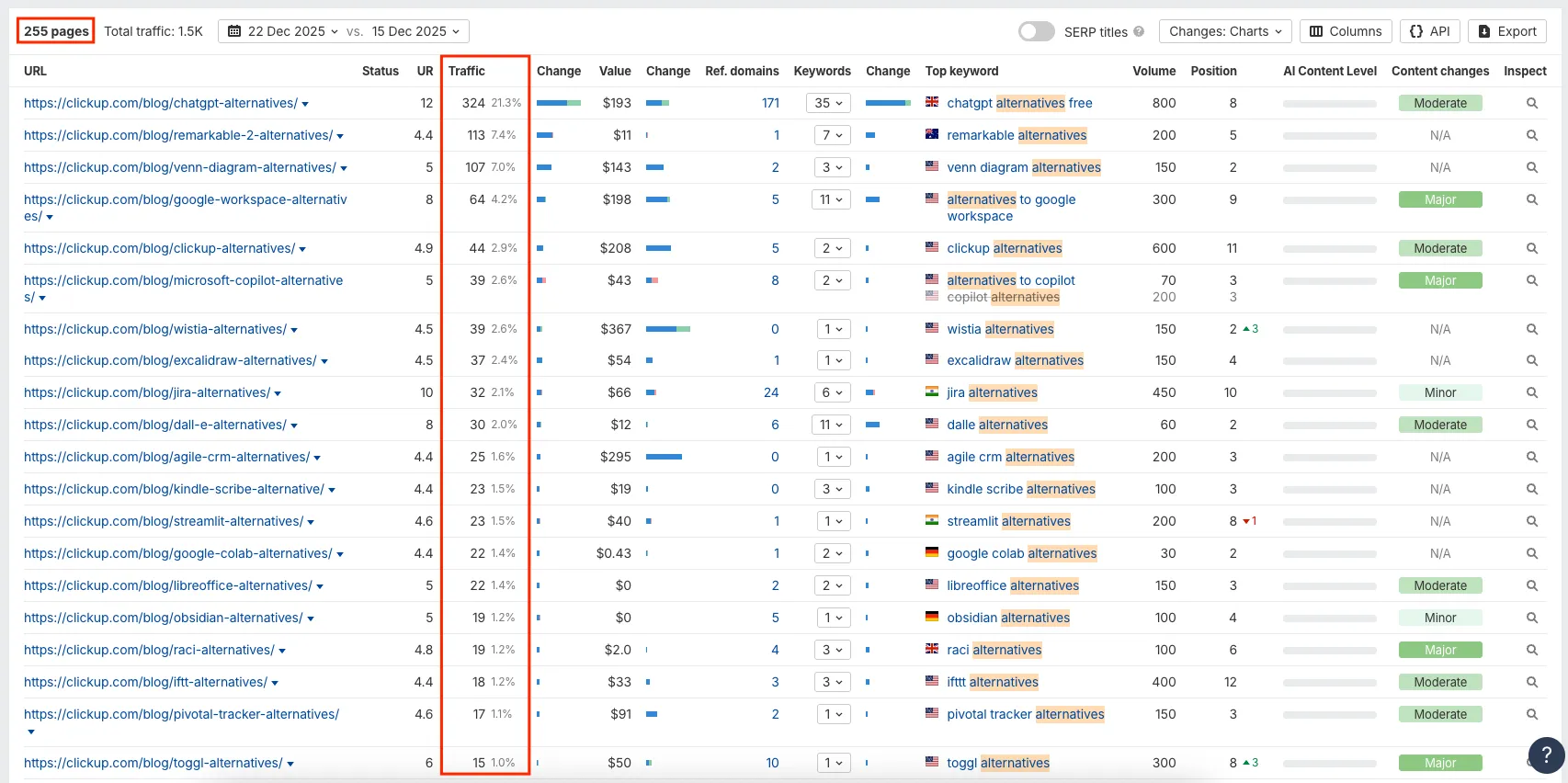
But again, traffic isn’t the whole story.
These pages attract users who are:
– Already aware of the problem
– Actively comparing tools
– Close to making a decision
This is high-conversion SEO. Alternatives pages don’t scale traffic fast, but they scale revenue.
Templates: the underrated traffic multiplier
This is where ClickUp quietly did something very smart.
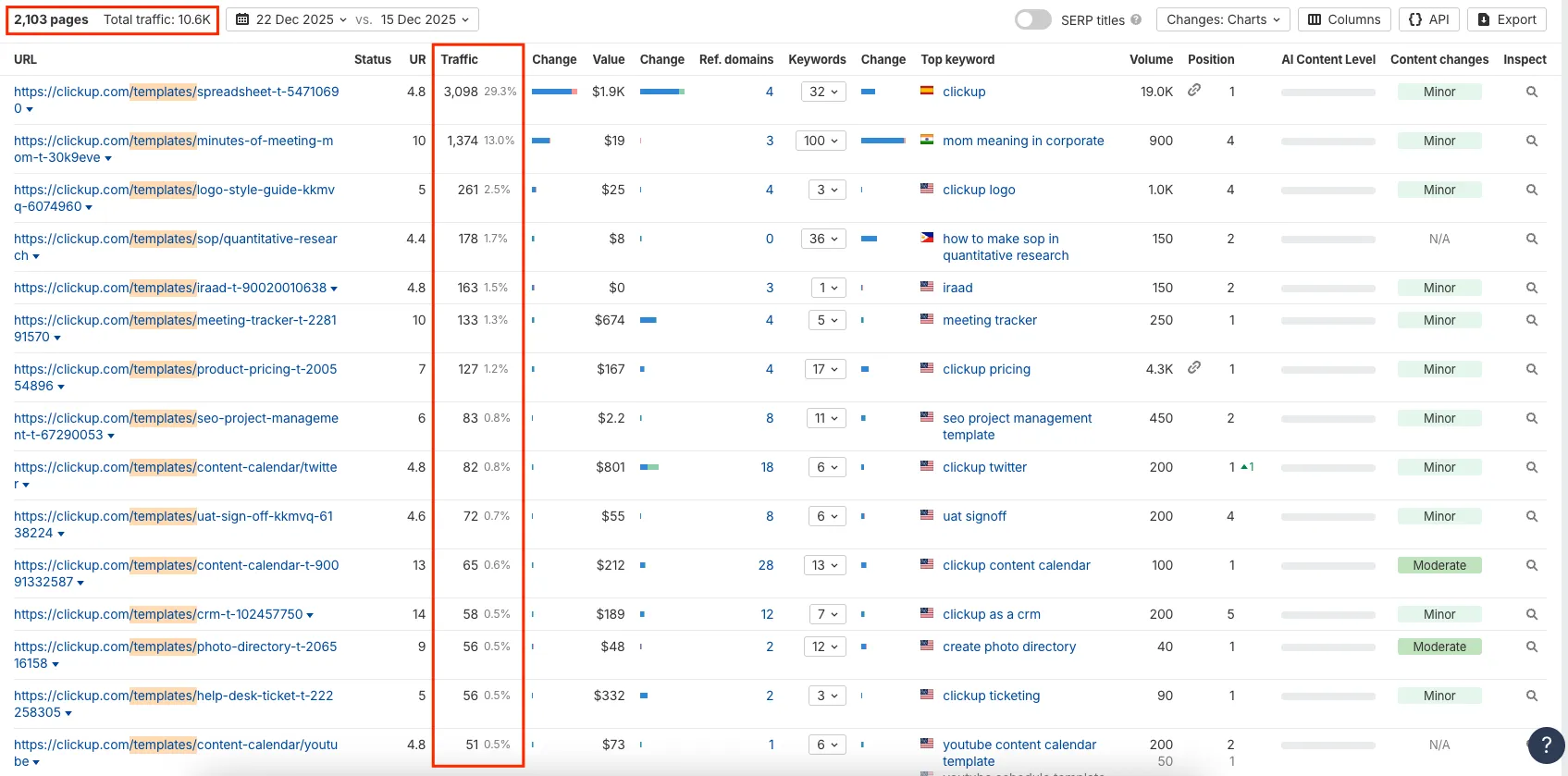
They built a massive templates library covering real operational needs across marketing, finance, engineering, and operations.
Today:
– 2,000+ template pages
– 10k+ organic visits per month
But more importantly, templates act as:
– Entry points for new users
– Evergreen content assets
– Internal linking hubs back to features and docs
Templates are the kind of content that doesn’t spike; it accumulates.
If you’re ignoring templates in SaaS SEO, you’re leaving money (and links) on the table.
Guides: content that’s not meant to rank
Here’s something I respect a lot.
ClickUp created playbooks, guides, and research content that isn’t designed to drive traffic.
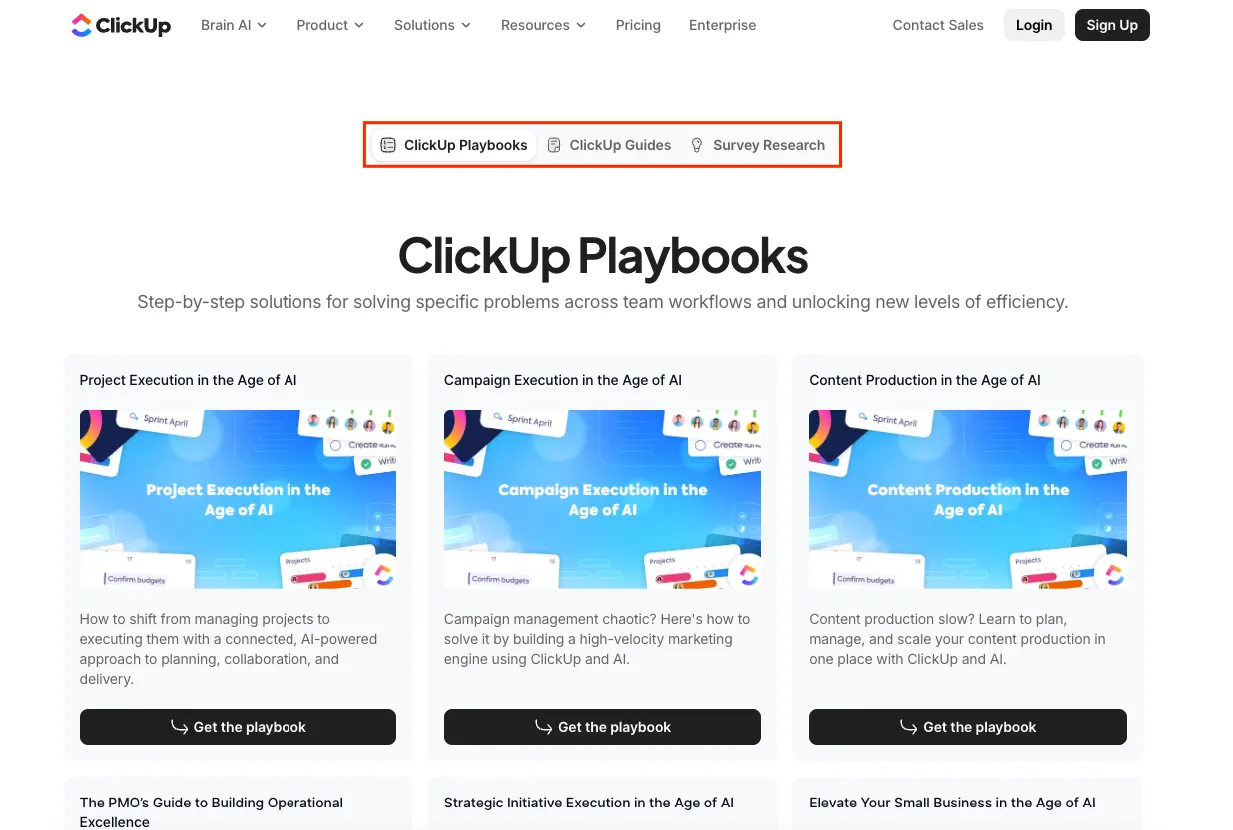
And that’s intentional.
These assets:
– Support sales
– Build authority
– Improve user success
Not every page needs to rank. Some pages exist to make the entire site stronger.
That’s advanced content strategy.
Blogs: the real traffic engine
Let’s be honest, the blog is doing the heavy lifting.
ClickUp has published 28,000+ blog posts, and the blog alone drives ~470k organic visits per month, roughly half of their total organic traffic.
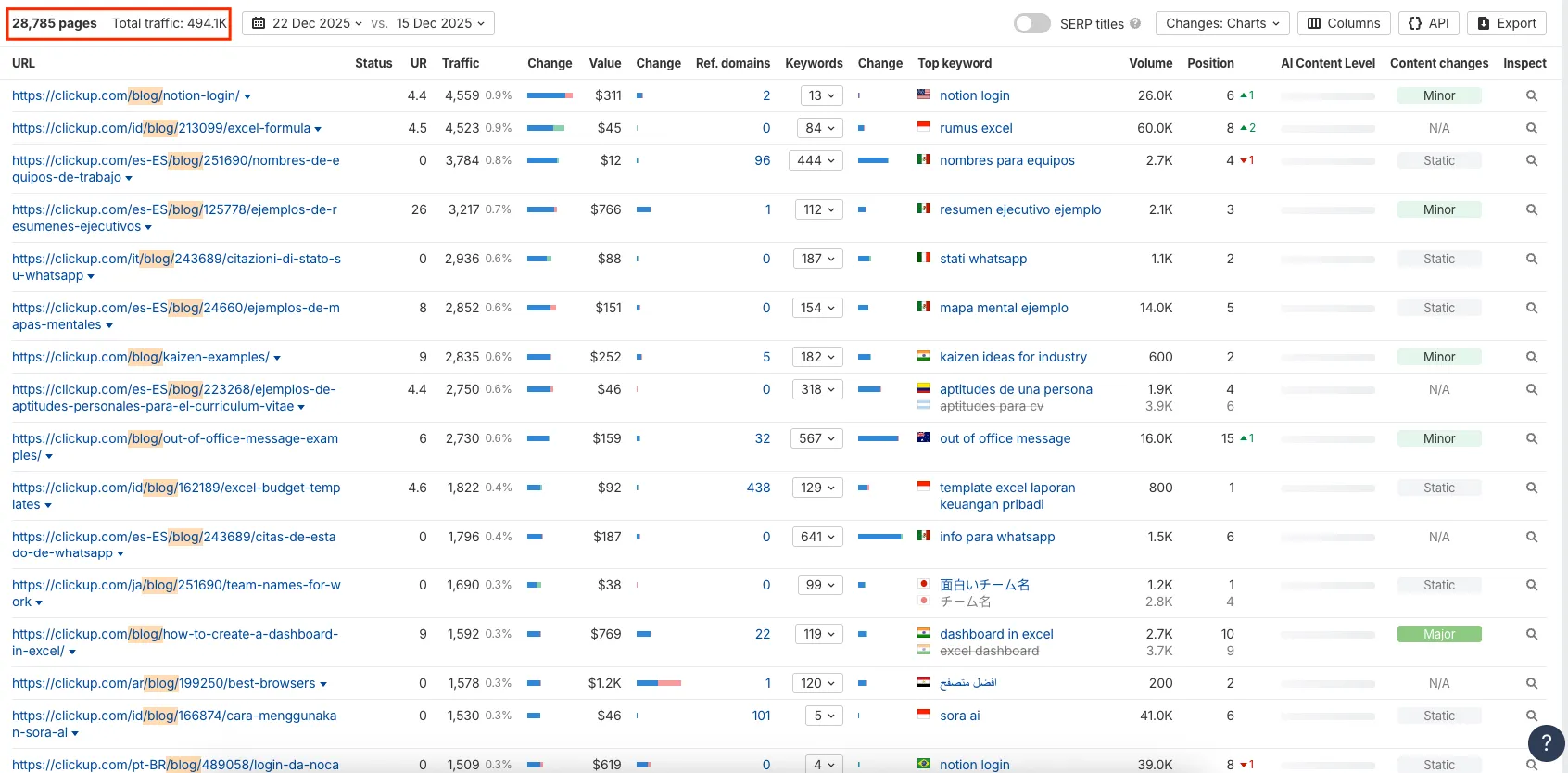
This isn’t random blogging.
They systematically covered:
– Informational queries
– Workflow problems
– Industry use cases
– Long-tail operational searches
Over the years.
This is what happens when you treat blogging like infrastructure, not campaigns.
An international SEO most people miss
One of the most fascinating findings:
Brazil dominates ClickUp’s organic traffic.

Nearly 68% of their traffic comes from Portuguese (Brazil).
That didn’t happen by accident.
They:
– Translated blogs properly
– Implemented hreflang correctly
Most SaaS companies do “international SEO” and stop at English-speaking countries.
ClickUp didn’t.
They went where competition was lower, and demand was exploding.
Smart, patient, and highly defensible.
My SEO opinion on ClickUp’s strategy
ClickUp didn’t “win SEO.”
They outlasted everyone else.
They bet on:
– Volume + structure
– Long-term compounding pages
– Covering every stage of intent
– International demand early
No hacks. No shortcuts.
Just consistent, system-level SEO execution.
Action points you can steal from this analysis
If you take nothing else from this breakdown, take these:
- Think in content systems, not individual blog posts
- Feature pages and integration pages matter, even if traffic is low
- Alternative content is about revenue, not traffic volume
- Templates are one of the easiest long-term SEO wins
- International SEO is a growth opportunity, not an afterthought
You don’t need 28,000 blog posts. You need a system that compounds.
That’s the real ClickUp lesson.
And most importantly: SEO rewards the teams who show up every year, not every quarter.
If you’re building for the long game, ClickUp is a case study worth studying twice.