How AI Search Really Chooses What to Cite (500 Queries Analysed)
I came across an interesting Reddit post that honestly made me rethink how most of us write SEO content.
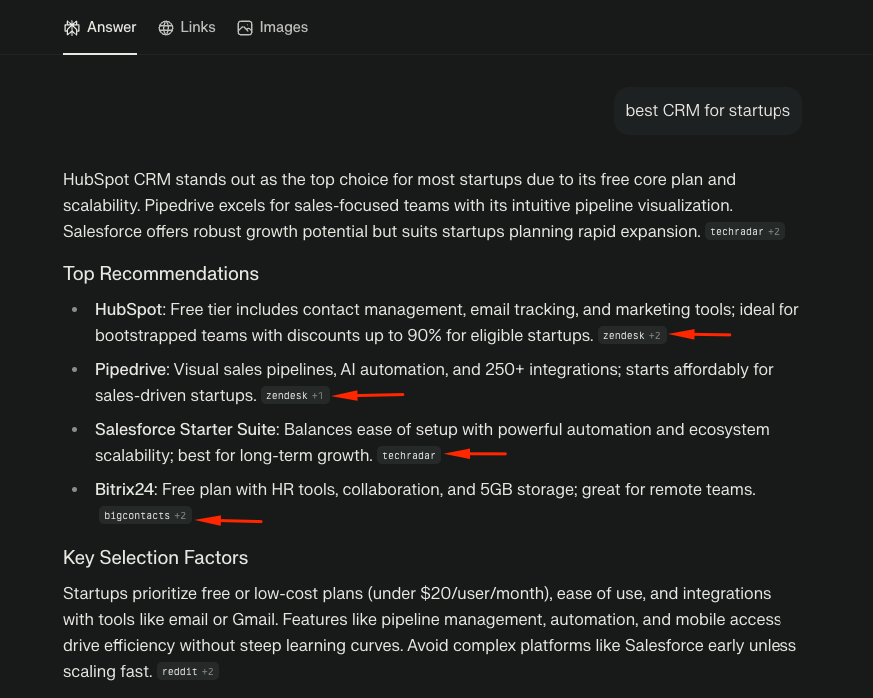
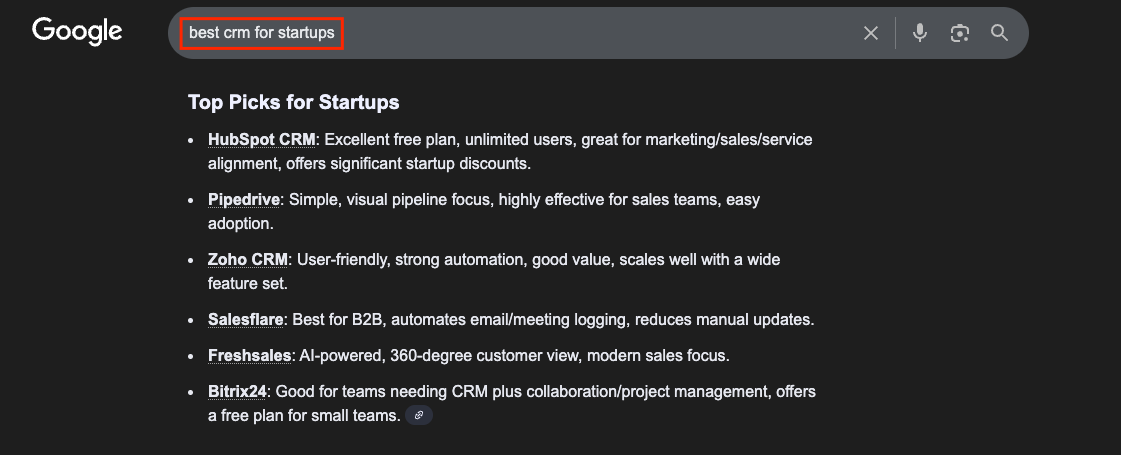
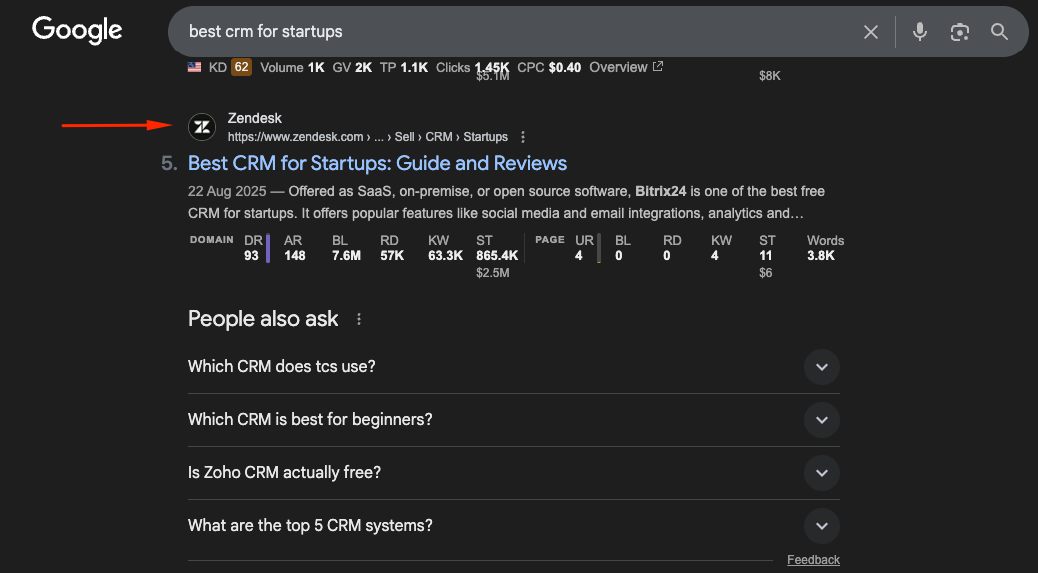
The author analyzed 500 B2B SaaS queries on Perplexity and compared what Perplexity cited versus what ranked on Google.
Queries like “best CRM for startups” or “how to implement RAG.”
The result was surprising: only 32% of Google’s #5 results were also the main citation in Perplexity.
In other words, ranking on Google does not automatically mean visibility in AI search.
That alone should make every SEO pause.
What the post is really about
The core message is simple:
AI search engines do not reward content the same way Google does.
Google loves long, “comprehensive” guides.
LLMs prefer dense, structured, factual content.
The author found three big differences between content that gets cited and content that gets ignored.
1. Information density matters more than length
The winning pages were not longer.
They were tighter.
They had more facts per word.
Think stats, pricing, limits, features, comparisons.
LLMs have limited retrieval windows.
If your page spends 300 words warming up with definitions and storytelling, the AI may never even reach your useful part.
This explains why many beautifully written blog posts are basically invisible to AI.
2. Specific language beats marketing language
This part hit hard.
“Cheap email marketing solution” loses.
“Free tier with 2,000 daily active contacts and SMTP relay” wins.
Why? Because AI systems work on semantic closeness. Specific phrasing gives the model something concrete to match.
Fluffy marketing language is invisible to vectors.
3. Structure is not optional anymore
Pages with clear H2 → H3 → bullet lists or tables were cited four times more often.
Long paragraphs bury data.
Lists expose data.
From an AI perspective, bullet points and tables look like high-confidence, extractable information.
What I think
I believe this explains why so many SEOs feel confused about AI search. We are still writing for Google’s ranking system, not for AI retrieval systems.
We optimize for:
- Word count
- Keyword placement
- “Comprehensiveness”
But AI optimizes for:
- Extractability
- Precision
- Structure
- Data density
It is not about storytelling anymore. It is about usability for machines.
What I suggest
You do not need to stop writing long guides. You only need to change how you structure them.
Put answers before introductions. Replace long paragraphs with bullet points where possible.
Use specific, concrete language. Write more like a product datasheet than a blog essay.
A simple test: if an AI cannot easily extract and reuse a sentence, rewrite it.
At the same time, keep perspective.
Perplexity has about 0.02% market share by traffic, so it does not make sense to sacrifice Google rankings just to chase AI citations.
Google still drives most traffic, while AI search shows the direction of discovery.
The goal is not to choose between Google and AI, but to work with both.
Google brings users to your page. AI pulls your page into answers.
Write for humans, and format for machines.
That balance will matter most going forward.